
Parameter management
What is wind turbine parameter management?
Educational content
September 16, 2025
5 min read
Parameter management for wind turbines helps unlock performance, cut downtime, and reduce reliance on OEMs. With the right tools, you can take control across your fleet and optimize on your own terms.
With thousands of parameters controlling how turbines operate, even small mistakes can have big consequences. Independent parameter management for wind turbines gives operators the tools they need to take control, reduce dependency on OEMs, and support smarter wind farm optimization across all sites. On this page, we explore what parameter management really involves, why it matters, and how you can simplify it – even in complex, multi-OEM fleets.
What is parameter management for wind turbines?
Parameter management for wind turbines is the process of configuring, monitoring, and maintaining the thousands of operational settings that control how a wind turbine behaves. These parameters determine how the turbine reacts to wind conditions, grid signals, system faults, maintenance events, and more.
Each turbine can have several thousand parameters, covering everything from pitch control and generator behavior to alarms, thresholds, and braking logic. Because they are parameters on unit or even sub-unit level, some also refer to them as unit parameters. Managing these parameters correctly ensures that turbines operate efficiently, safely, and in line with your performance goals.
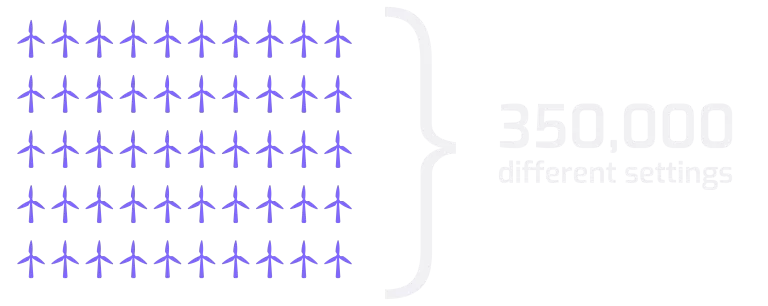
But, as the scale of wind turbines increases, this becomes a significant challenge. In a medium-sized wind farm with 50 turbines, you could be managing 350,000 individual settings. Consequently, even minor errors or overlooked changes can lead to inefficiencies or expensive downtime.
Why is parameter management for wind turbines important?
When parameters are misconfigured, inconsistent, or simply outdated, turbines may underperform or behave unpredictably. Consequently, you might experience reduced output, unnecessary stops, or even regulatory compliance issues. So, effective parameter management is about more than keeping turbines running – it is about running them right.
However, visibility and control are also crucial. Many operators depend on OEMs to implement even minor changes, but without an uninterrupted overview of your fleet, identifying which turbines have non-standard settings becomes challenging, and optimizing performance at scale is impossible. Independent parameter management for wind turbines gives operators the tools to be proactive instead of reactive and ensures that no critical setting goes unnoticed.
How can parameter tuning improve wind turbine performance?
Parameter tuning can have a direct and measurable impact on both energy yield and turbine longevity. For example, adjusting start-up and shutdown thresholds to match local wind profiles can reduce wear and increase uptime. Furthermore, fine-tuning generator behavior or alarm logic can assist in meeting grid requirements or avoiding unnecessary shutdowns.
Additionally, parameter tuning also supports smarter fault handling. If a sensor fails but the turbine is otherwise operational, temporarily disabling the associated alarm, instead of shutting down the entire turbine, can prevent days of lost production. When managed responsibly, parameter tuning becomes a powerful lever to optimize turbine performance, improve availability, and reduce unnecessary wear.
Can parameter management reduce turbine downtime?
Yes – and often dramatically. Turbine downtime can be triggered by overly sensitive alarms, missed updates, or incorrect parameter values. With effective parameter management, operators can identify and resolve these issues before they lead to outages.
Here, direct access to parameter settings has a clear benefit. Instead of waiting for an OEM to step in, operators can make immediate changes, such as resetting a parameter after maintenance or adjusting a control threshold based on weather conditions. This ability to act quickly and independently is what makes independent parameter management for wind turbines a crucial aspect of reducing downtime and ensuring reliable operations.
Can SCADA systems automatically optimize wind turbine parameters?
Although some advanced wind turbine SCADA systems allow for automated or semi-automated optimization of wind turbine parameters, their capabilities differ significantly. In many cases, OEM-provided SCADA platforms grant only limited access to parameter settings, which forces operators to rely on service contracts or support requests to make even basic adjustments.
On the other hand, independent SCADA solutions can offer significantly more flexibility. With the appropriate platform, remote parameter management becomes a standard part of operations, supported by change tracking, alarms, and even batch adjustments across multiple turbines. For operators looking to take ownership of performance, having a SCADA system that supports full parameter management for wind turbines is a game-changer.
How can I simplify parameter management across different turbine types and OEMs?
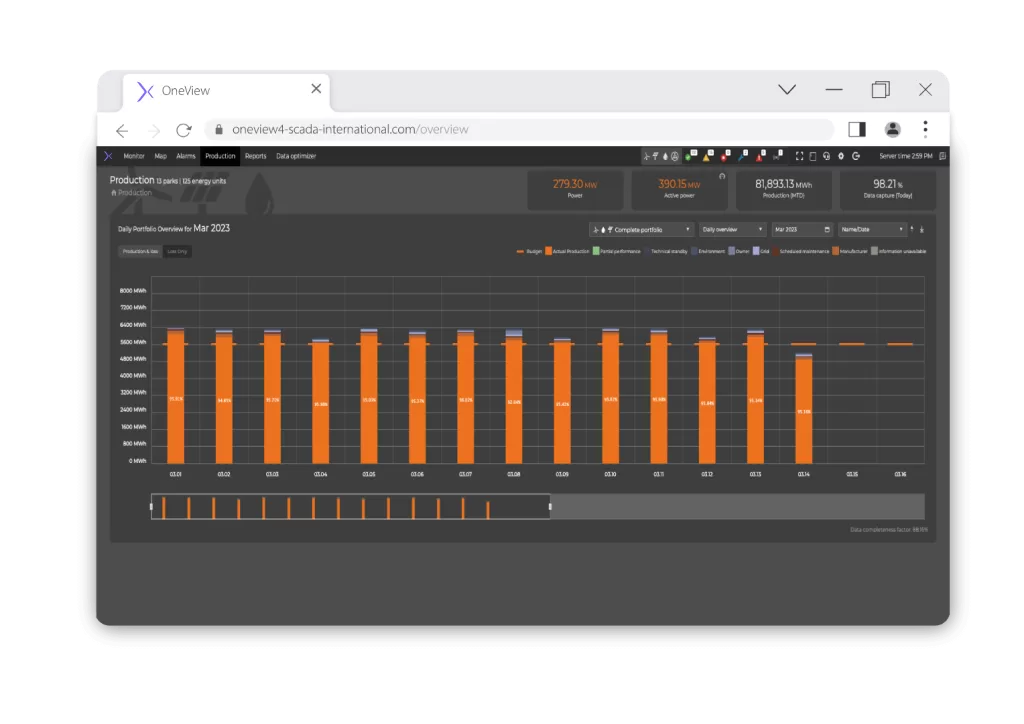
Operators are often responsible for hundreds of thousands of parameters, and spotting outliers manually is nearly impossible. The Parameter Management module simplifies the process of identifying deviations, preventing oversights, and optimizing your fleet without the need for multiple tools or vendors. It offers a smarter, more flexible approach to parameter management that puts control and opportunity back in your hands.