
Data integration
Why data integration is the hidden hero in hybrid energy management?
Educational content
November 28, 2025
7 min read
In today’s renewable landscape, hybrid energy management is becoming the new normal. Hybridization entails combining wind, solar, and storage technologies into one coordinated operation. But coordinated hybrid operations are like nothing we have seen before. Behind every smooth dashboard and performance report lies a much more complex reality. What looks seamless on the surface is, in fact, a web of systems – each with its own sensors, software, and naming conventions. So, when scaling, you’re not just adding new assets; you’re adding layers of complexity. And this is where data integration quietly becomes the hidden hero – if done right, of course.
What makes hybrid energy operations so complex?
To understand the real value of data integration, we need to rewind a few decades. In the early days of the wind industry, integrating data from multiple sources wasn’t a major concern. Wind farms typically consisted of one turbine type, meaning asset managers only handled a single, uniform dataset – simple and manageable.
As the industry matured, portfolios grew and diversified. New turbines from different manufacturers entered the mix, each producing data in its own format, measured on its own scale, and in its own “language.” Without a unifying layer of data integration, these differences make it nearly impossible to see the full picture and act upon the data to make informed decisions. With several turbine types in play, asset managers were no longer comparing apples to apples – but pears to bananas.
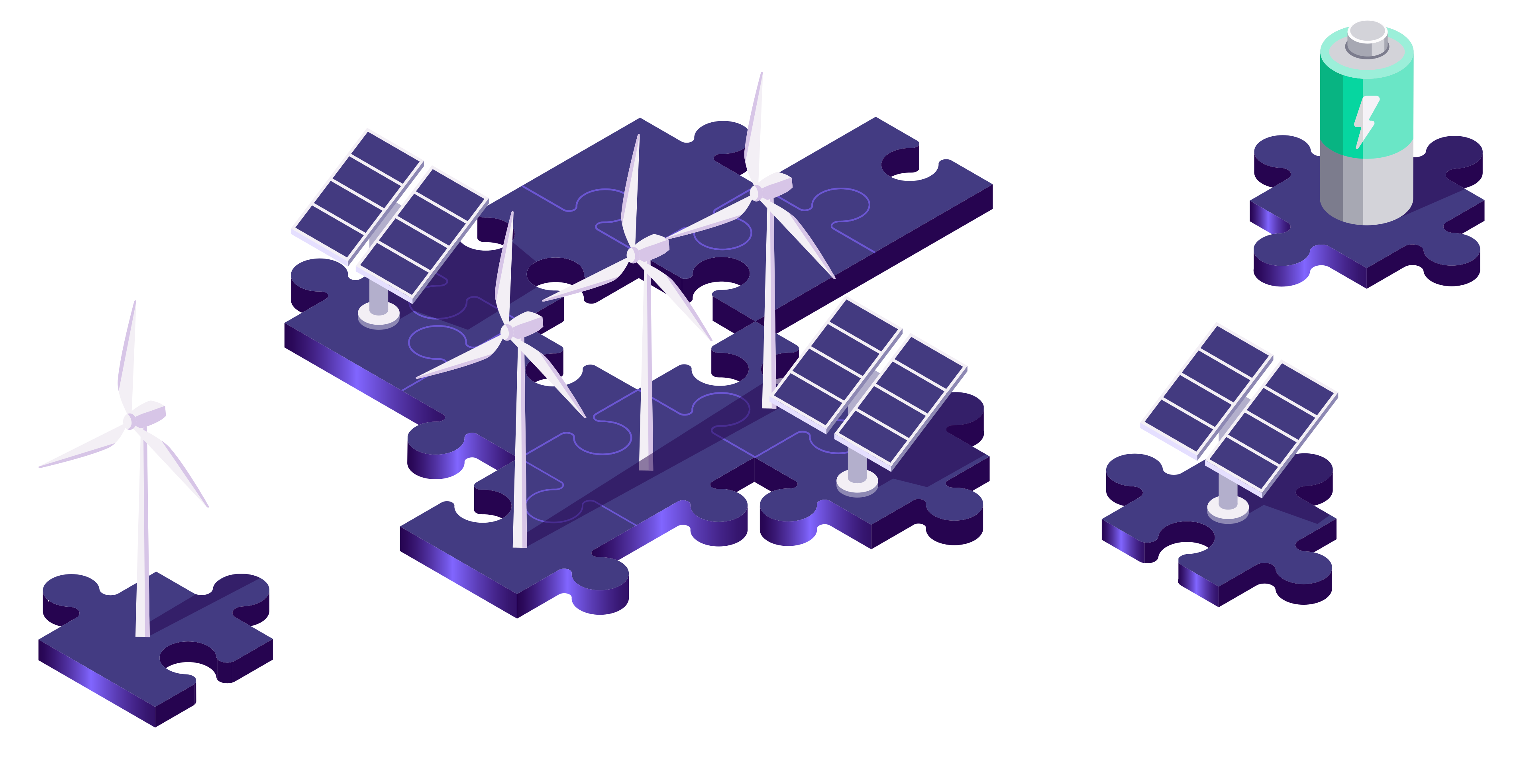
A decade later, solar PV started to mark its entrance into the renewable market, introducing a brand-new level of complexity. The solar market is highly fragmented, with numerous manufacturers and vendors involved in building each site. Standardizing data across such a diverse landscape became increasingly difficult. And this didn’t just make data integration useful, but essential.
Fast forward to today, battery energy storage systems have joined the portfolio, adding yet another data stream to manage. Without a unified data integration platform to translate all these inputs into one coherent dataset, operators are left with a puzzle made of mismatched pieces. Operators are left comparing outputs that don’t align. Here, operations become both risky and time-consuming, and decisions can quickly turn into costly mistakes.
So, hybrid energy management isn’t about operating more assets, but about managing diversity.
How do you streamline data from various renewable sources?
Data integration is the hidden hero because you don’t see it with your own eyes. Before data is shown in your energy management dashboard or in your performance report, it has been through several phases that all happen behind the scenes.
First, collecting data from the various sources requires an integration to plant PLCs, inverters, or local SCADA systems. To communicate directly with these devices often requires experience in driver development, as many of the devices use proprietary protocols.
From here, data is mapped and normalized based on industry standards like IEC 61400-25 and IEC 61850-7-4. Once standardized, the data is combined and cleaned, before it is presented in or sent to the asset manager’s preferred energy management tool.
Through smart data integration, inconsistencies are removed, units are standardized, and missing parameters are filled.
What technology is used for data integration from renewables?
The process of data integration, normalization, and cleaning is typically a job for independent SCADA systems and software. Most modern SCADA systems rely on automations and AI practices to handle. But they often do more than that; they enrich the data. This can be removing or highlighting outliers in the dataset, collecting both live and historical data, and offer intelligent reporting tools to streamline performance reviews.
Just like the renewable energy landscape has evolved, so has the industry requirements to SCADA software and other energy management platforms. Owners and operators are no longer settling for patchy, second-rate solutions that limits their options in optimizing their fleets. They require reliable data and software that enable them to optimize performance in every corner of their production. Smart software and domain expertise are essential to bring order to the new-added technological complexity. Here, seamless data integration can bridge the gap between raw inputs and usable insights.
What are the benefits of data integration in hybrid operations?
The 80/20 rule is still very much alive in renewable asset management. You hear about teams that spend most of their time – about 80 percent cleaning and organizing data – and only 20 percent actually using it to make informed decisions.
One of the biggest advantages of data integration is that it flips that balance. When data is automatically cleaned, normalized, and unified, asset managers can spend more time on optimizing performance and driving business strategy. With direct access to reliable data across the entire renewable portfolio, managers can make decisions with confidence. Reliable operations start and end with reliable data.
Another clear benefit is that you can handle all operations in one software, because your data are unified. This means that you from the Remote Operations Center (ROC) can start and stop assets across your entire portfolio with just one click. Instead of juggling several systems, you have one access point for all your operations. That streamlined control also makes it far easier to scale. As portfolios grow and technologies multiply, standardization becomes the key to scalability and efficiency.
Last, data integration means consistency. By standardizing data – and therefore operations – asset managers gain a consistent view of performance across all technologies and sites. With fleet-level benchmarking, you can instantly identify underperforming sites.
In short, integrated data creates the foundation for more accurate reporting, faster decision-making, and a more reliable path to growth your business.
What new demands does data integration bring?
It is clear that reliable and seamless data integration is an essential part of current and future hybrid energy operations. It helps overcome the growing complexities of hybridization – mitigating operational risks, closing performance gaps, and enabling more stable, efficient management across diverse technologies.
But as the renewable landscape evolves, one thing is certain: more wants more. Asset owners want more data. And they are asking for deeper insight, more diagnostics, and stronger decision support. Every day, renewable assets generate millions of data points – from weather forecasts and grid signals to inverter performance and maintenance logs. Yet, for many, that still isn’t enough. They want the ability to diagnose issues down to the root cause – and that requires not just more data, but better data access.
In hybrid energy management, ownership is more than who owns the assets – it’s who owns the data. Without full access to operational data, operators risk relying on default settings that may undermine performance or strategic goals. With the right data integration framework, asset owners gain visibility into raw data, such as parameter settings from wind turbines, and use the information to make decisions independently. In that way, direct access to data builds trust and ensures that every adjustment made is based on verified, real-time information. Basically, driving data-driven decisions.