
Grid services
Comprehensive grid connection studies for power plants, including sizing, asset modeling, and full grid code compliance
Is grid complexity delaying or disrupting your power plant projects?
Connecting and operating a power plant requires more than meeting technical requirements. Developers and asset owners must understand network conditions, asset interactions, and potential constraints.
From grid connection studies and hybrid plant consulting to model-based grid compliance and grid analytics, we help identify challenges early and support informed decisions from project development through operation.

Turn complex grid challenges into confident project decisions
Explore our power engineering services to find the support you need for your specific project
Are grid connection requirements and evolving grid codes challenging your project?
Grid connection studies help renewable energy developers, IPPs, and asset owners validate compliance, assess plant performance, and identify technical risks before they impact project timelines.
We support projects across the energy market, helping customers navigate requirements from TSOs and DSOs, and prepare for key milestones within the grid connection process.
-
Achieve a reliable and compliant grid connection
-
Validate compliance with grid code and interconnection requirements
-
Identify technical risks early and reduce the need for costly redesigns
-
Support RMS, EMT, and grid performance studies for renewable and hybrid power plants
-
Receive clear recommendations and documented compliance outcomes to support project decisions
Are multiple suppliers making your hybrid energy projects harder to manage?
Hybrid power plants often combine solar, wind, battery energy storage systems (BESS), grid connection infrastructure, and plant control systems delivered by multiple suppliers. As the number of technologies and interfaces increases, so does the complexity of coordinating design decisions, compliance requirements, and project execution.
Acting on behalf of the plant owner, Opoura combines grid connection expertise with a deep understanding of hybrid plant controls to navigate technical complexity and support confident decision-making throughout the project lifecycle.
-
Outsourced ownership and coordination across technologies and suppliers
-
Reduced project complexity for plant owners and developers
-
Earlier identification of technical and integration risks before commissioning
-
Improved alignment between grid compliance, plant controls, and system integration
-
Increased time to focus on your core business
How do you ensure grid compliance across every unit of a hybrid power plant?
Opoura’s Unit Model Engine (UME) supports grid-compliance studies with consistent and validated representations of each unit against system operator requirements.
It delivers ready-to-use models for large-scale loads, such as BESS, data centers, and large-scale heating or cooling systems, across all relevant simulation types, including RMS, EMT, and harmonic modeling, for different simulation software.
-
DIgSILENT PowerFactory
-
TSAT
-
PSS®E
-
PSCAD
Are cost surprises putting your ROI at risk?
Investing in a new power plant involves major financial commitments, and once contracts are signed, there may be limited room to correct costly technical or commercial assumptions.
Our Plant Investment Analysis provides an independent engineering perspective before Final Investment Decision (FID) or as part of due diligence. We assess the project, major components, suppliers, cost assumptions, and performance expectations to identify potential red flags and risks before they become expensive problems.
-
Determine the economic viability of your power plant project through a pre-FID (Final Investment Decision) analysis
-
Gain the necessary insights through a thorough due diligence of full-scale projects, major components, and suppliers
-
Get expert guidance to protect your investments and make confident, strategic decisions with our independent consultants
Grid code expertise
Engineering competencies across market-specific requirements, from connection to compliance
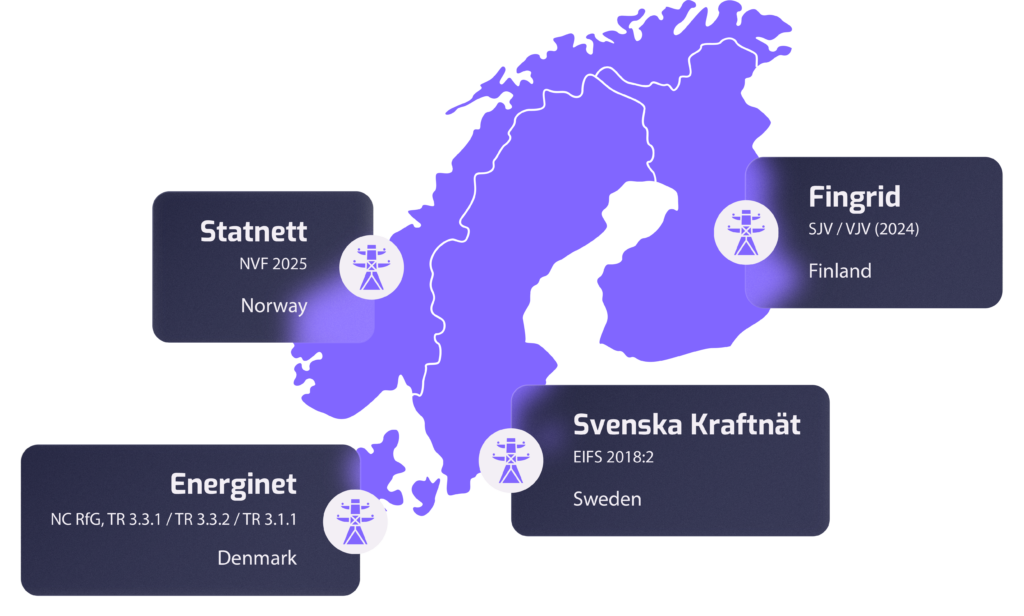
Finland – Fingrid – SJV 2024 / VJV 2024; Denmark – Energinet – NC RfG, TR 3.3.1 / TR 3.3.2 / TR 3.1.1; Sweden – Svenska Kraftnät – EIFS 2018:2; Norway – Statnett – NVF 2025
Struggling to qualify viable grid connections in the UK & Ireland?
Identifying viable connections is challenging, especially when faced with mounting competition and a lengthy, costly, and opaque connection system.
With clear insight into your connection options, you can move faster, reduce development risk, and focus your resources on projects with real potential.
Our report gives you early, site-specific visibility into several strategic areas.
-
Capacity
-
CapEX
-
Energy Yield (GWh) including curtailment
-
Realistic timelines
"As energy projects become increasingly complex, plant owners and operators often face a shortage of in-house expertise to cover every aspect of project delivery. Typically, these projects require lean, multidisciplinary teams capable of integrating grid connection studies, and technical project management throughout the entire project cycle. At Opoura, we bring all these capabilities together, enabling efficient project execution from concept to commercialization." says Thomas Boll Matthiesen, Senior Sales Executive at Opoura.
Need more MW for your data center? Hold on before
re-applying in the UK & Ireland
When your data center needs more capacity, a new grid connection may seem like the obvious solution. But your existing connection may have more potential than you think. Differences between customer-owned equipment and the wider network can create opportunities to access additional capacity.
Let us assess your existing connection and provide a report with practical recommendations and clear next steps before you commit to a new connection.
Engineering recommendations
Practical recommendations based on the assessment findings
Clear next steps
Know what to take forward, what further action may be needed, and what to discuss with your NESO
Grid application support
Support with preparing and progressing your grid application
Power engineering expertise
Access to our wider Power Engineering team where additional expertise or studies are required
Resources & use cases
Press release
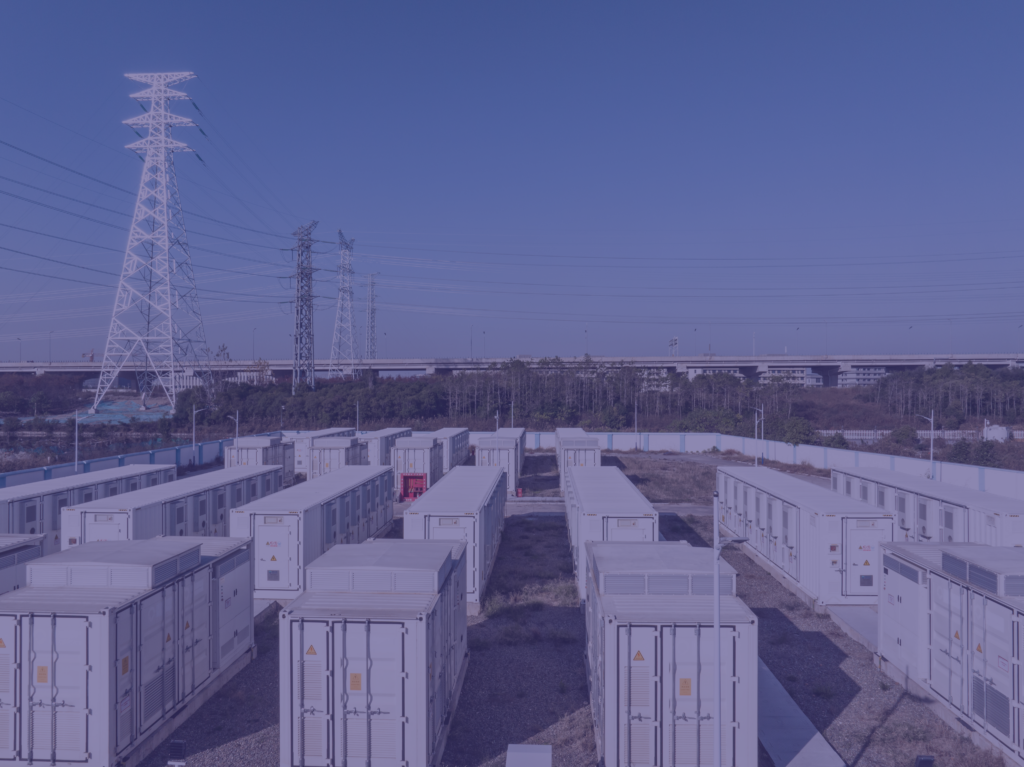
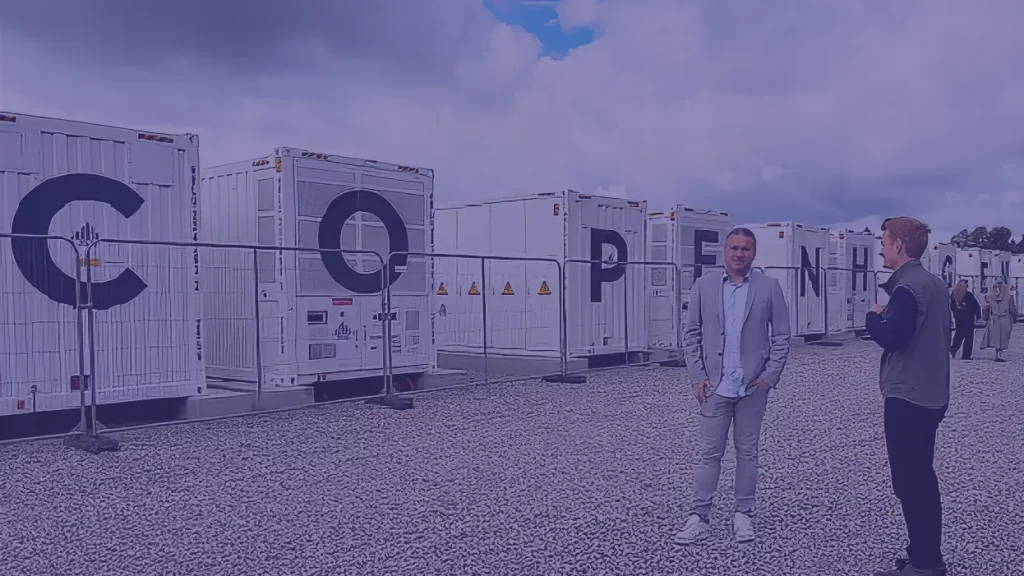
Opoura supports Copenhagen Energy’s Ringsted project with full-stack BESS delivery

Technical article
Engineering considerations for assessing available network capacity for data centers
FAQ
What are grid compliance and grid connection studies?
Grid compliance and grid connection studies verify that a power plant can connect to the electrical grid and meet the requirements of the relevant TSO or DSO. Through simulations, they assess how the plant behaves under different operating conditions and are a critical part of the approval process before energization and commercial operation.
How do I achieve grid compliance for an energy project?
Grid compliance is achieved by demonstrating that your facility meets the applicable grid code and grid operator requirements. This typically involves a combination of grid compliance studies, including RMS and, where required, EMT simulations, together with technical documentation, validated equipment models, and plant testing. To complete these studies, project owners generally need the applicable grid code, grid connection agreement, single-line diagrams (SLDs), electrical design data, and validated models for key equipment such as inverters, battery systems, wind turbines, and plant controllers.
When should grid compliance activities start?
Grid compliance activities should begin early in the project lifecycle. In Nordic markets, studies often start up to two years before ION, with key submissions required approximately one year in advance. Early engagement provides time for model validation, technical alignment, and corrective actions, helping reduce risk for plant owners and developers.
Who is responsible for grid compliance in hybrid power plants?
Grid compliance is increasingly a plant-level responsibility. While OEMs validate their own equipment, they are not typically responsible for the behavior of the integrated plant. In hybrid projects, plant owners and IPPs must ensure clear ownership, supplier alignment, and system-level validation to demonstrate compliance across the entire facility.
What does a hybrid plant consultant do in energy projects?
A hybrid plant consultant (or owner’s engineer) serves as the project owner’s technical representative, providing independent expertise throughout project development and delivery. This includes reviewing plant design, supporting technology selection, coordinating suppliers, assessing grid compliance requirements, and helping ensure that technical decisions align with project objectives, timelines, and budgets.
When should a hybrid plant consultant be involved in a project?
The greatest value is typically achieved early in the project lifecycle, before key technical and commercial decisions are finalized. Involving a hybrid plant consultant during concept development, RFQ preparation, technology selection, and grid connection planning helps ensure that project requirements are realistic, risks are identified early, and supplier proposals can be evaluated from an independent perspective.
Ready to turn grid complexity into a clearer path forward?